
Technical SEO Enhancements
Back to Organic Traffic Enhancement
Good content on a technically broken page still loses. Slow load times, a layout that doesn't work on a phone, markup search engines can't parse, or pages a crawler can't even reach all quietly cap how well content can rank — no amount of writing quality fixes any of them.
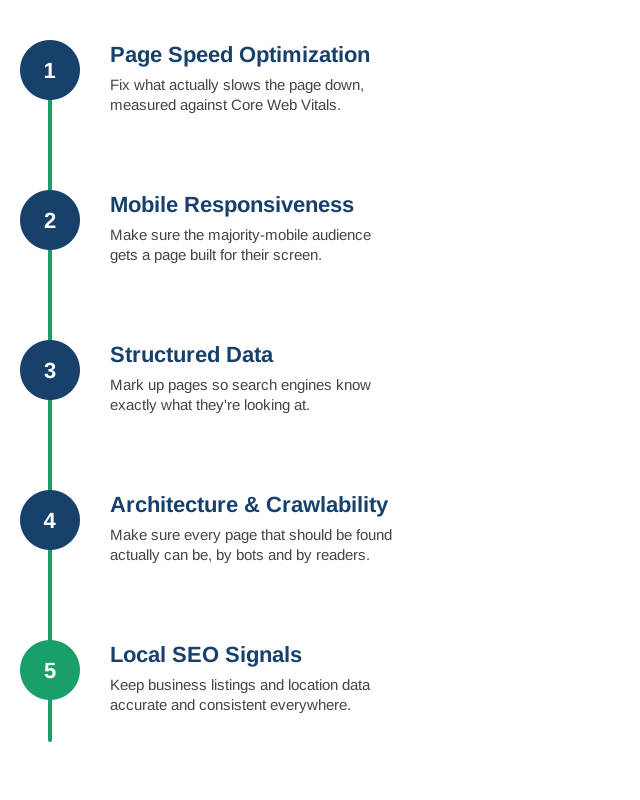
1. Page Speed Optimization
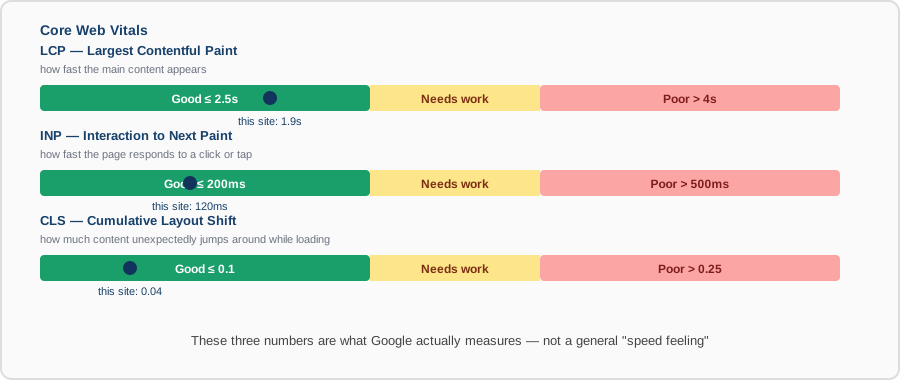
Speed is no longer a vague "feels fast" impression — Google measures it directly through three Core Web Vitals metrics, and a page that misses them can be held back in rankings regardless of how good the content is.
- Largest Contentful Paint (LCP): how quickly the main content becomes visible — driven by server response time, render-blocking resources, and unoptimized images.
- Interaction to Next Paint (INP): how quickly the page responds once someone actually taps or clicks something, not just how it looks while idle.
- Cumulative Layout Shift (CLS): whether content jumps around while loading — a frequent cause of mis-clicks and a frequent reason visitors bounce immediately.
- Image and asset optimization: compressed images, modern formats, and lazy-loading below the fold instead of shipping every asset up front.
2. Mobile Responsiveness and Usability
For most sites, a majority of search traffic now arrives on a phone, and Google indexes the mobile version of a page as the primary one. A page that only really works on desktop is being judged — and ranked — on its worse experience.
- Responsive layout: content that reflows correctly at phone and tablet widths, not a desktop layout simply shrunk down.
- Tap targets sized for fingers: buttons and links spaced so the right one gets tapped the first time.
- No intrusive interstitials: pop-ups that cover the content the visitor came for are penalized on mobile specifically.
- Legible without zooming: text sized to be read directly, not pinched-and-zoomed into readability.
3. Structured Data and Schema Markup
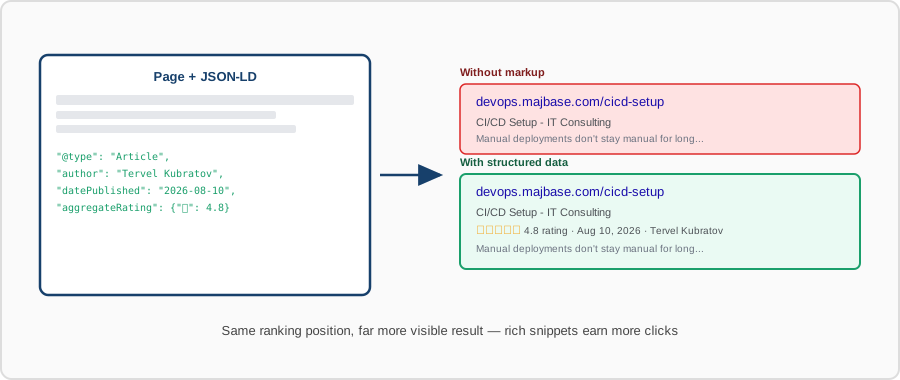
Structured data doesn't change what a page says to a human reader — it tells search engines, explicitly and unambiguously, what that content is. The reward is a richer, more clickable search result rather than a plain blue link.
- Schema.org markup: JSON-LD describing articles, services, organizations, and FAQs in a format search engines parse directly.
- Rich snippets: star ratings, author, publish date, and other details surfaced directly in the search result, ahead of the click.
- Breadcrumb markup: site structure exposed to search engines so results can show a page's place in the site, not just its URL.
- Validation: markup checked against Google's structured data guidelines so it's actually eligible for rich results, not silently ignored.
4. Site Architecture and Crawlability
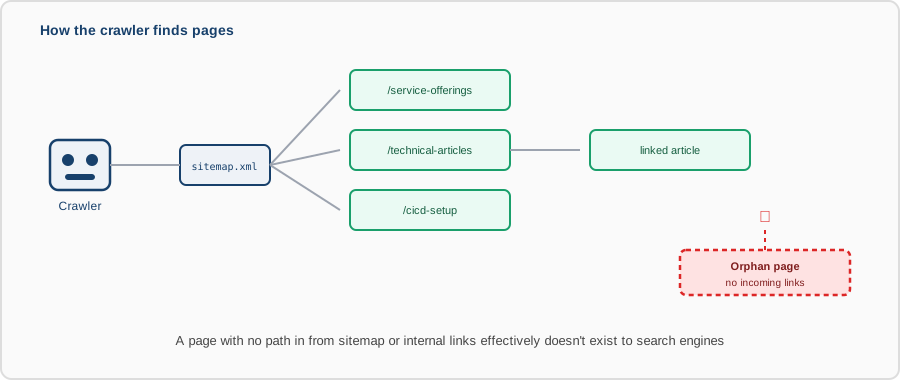
A page that search engines can't find is invisible to them no matter how good it is. Architecture determines whether a crawler ever discovers a page at all, and how much weight it assigns once it does.
- XML sitemap: a current, accurate map of every page that should be indexed, kept in sync as pages are added or removed.
- Logical URL structure: clear, hierarchical paths that reflect how content actually relates, instead of flat or auto-generated URLs.
- Orphan page elimination: every page reachable through internal links or the sitemap — a page with no path in effectively doesn't exist to a crawler.
- Robots directives and canonical tags: crawlers pointed at the right version of a page and kept away from ones that shouldn't be indexed, like duplicates or staging content.
5. Local SEO Signals
For a business serving specific regions or clients who search locally, technical SEO extends beyond the page itself to how consistently the business is described across the web.
- Business listing accuracy: name, address, and phone number matching exactly across every directory and map listing — inconsistency undermines trust signals search engines rely on.
- LocalBusiness schema: structured data marking up location, service area, and hours so local search results can surface them directly.
- Location-relevant content: pages that genuinely address the regions or markets being targeted, not a city name inserted into otherwise generic copy.
- Review and reputation signals: genuine reviews on the platforms that matter, since they factor into both local rankings and a visitor's decision to click through.
Contact us for a technical SEO audit, or to fix the specific issue that's already been flagged and never addressed.