
Content Creation and Quality
Back to Organic Traffic Enhancement
Publishing on a schedule and publishing content that actually earns rankings are two different disciplines. Search engines and readers reward the same thing for different reasons: content that genuinely answers the question it was written for, presented in the format that fits where the reader actually is.
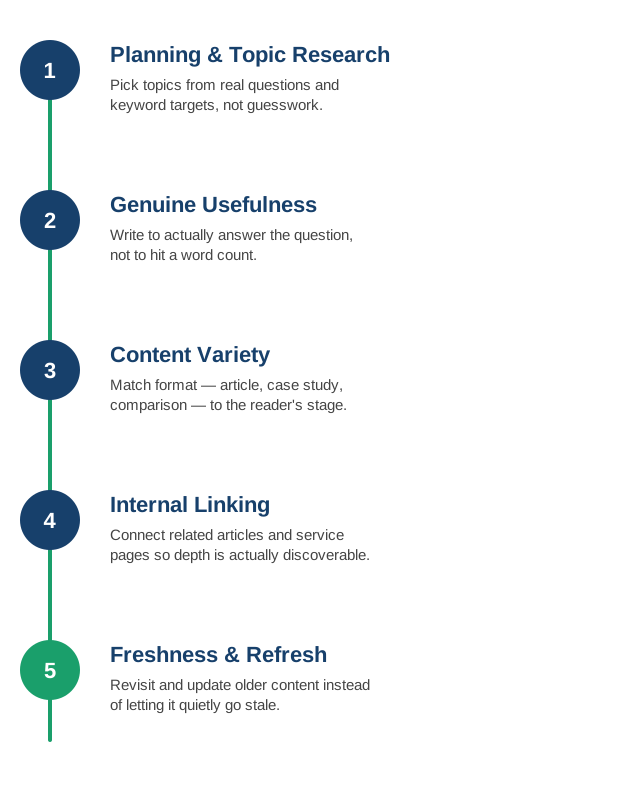
1. Content Planning and Topic Research
Topics are chosen deliberately — from keyword targets, real customer questions, and gaps competitors haven't covered well — rather than whatever seems interesting to write about this week.
- Keyword-driven topics: content built to fill a specific spot in the keyword strategy, not written first and hoping it ranks for something.
- Real questions from real conversations: support tickets, sales calls, and client questions are a direct feed of what to write about next.
- Editorial calendar: topics scheduled against business priorities, so a product launch or new service has supporting content ready, not written after the fact.
- Format decided up front: whether a topic needs an article, a case study, or something else is decided before writing starts, not improvised halfway through.
2. Writing for Genuine Usefulness
Content padded to hit a word count reads like it, and both readers and search engines are better at spotting that than they used to be. The bar is simple: would this actually help someone who searched for this?
- Answer the actual question: the specific thing someone searched for, addressed directly and early, not buried under three paragraphs of preamble.
- Concrete over generic: real numbers, real examples, real trade-offs — the kind of detail that signals someone who's actually done the work.
- No filler: if a sentence doesn't add information, it doesn't survive the edit — length is a side effect of thoroughness, not a target.
- Written by someone who knows the topic: technical accuracy checked by someone who's actually done what the article describes.
3. Content Variety by Funnel Stage
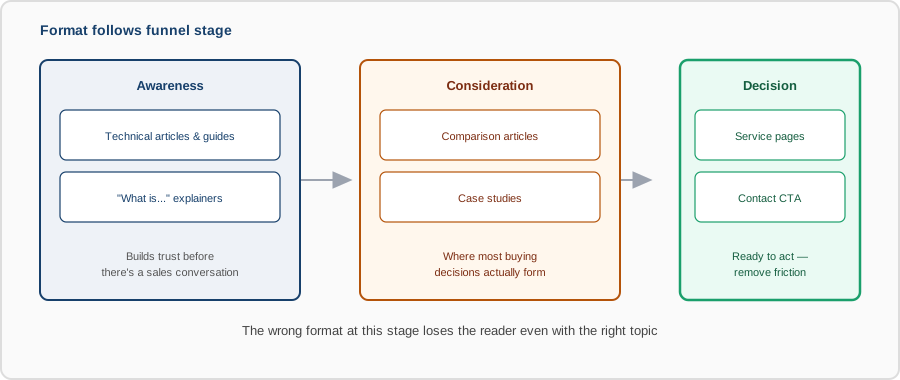
The right topic in the wrong format still loses the reader. Someone doing early research and someone ready to sign a contract need genuinely different pages, even on a related subject.
- Awareness stage: technical articles and "what is..." explainers that build trust before there's any sales conversation at all.
- Consideration stage: comparisons and case studies — where most buying decisions actually take shape, weighing real options against each other.
- Decision stage: service pages with a clear, low-friction next step, not more reading material for someone who's already decided.
- Matching format to intent: the same underlying topic often needs two or three different pieces of content across these stages, not one page trying to serve all three.
4. Internal Linking
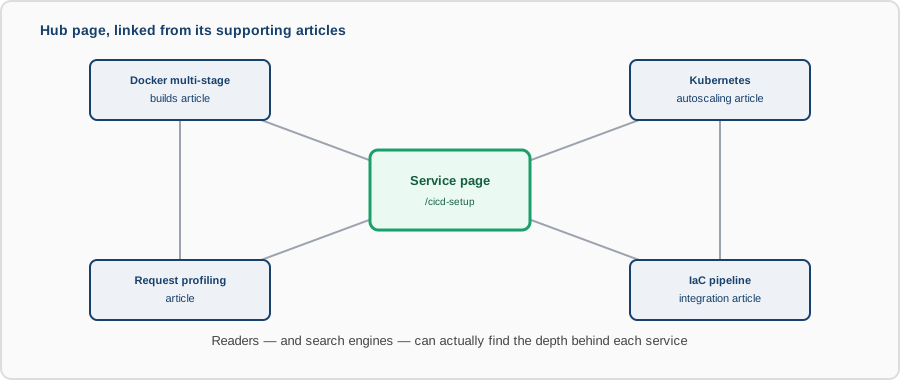
An article nobody links to is an island — hard for readers to stumble onto and hard for search engines to weigh appropriately. Every piece of content should connect to what's around it.
- Hub and supporting content: service pages linked from the technical articles that go deeper on a related topic, and vice versa.
- Contextual links, not link dumps: links placed where they're actually relevant to what the reader is doing, not a footer list of everything on the site.
- Orphan page checks: pages with no incoming internal links found and connected — a page nothing points to rarely gets found or ranked well.
- Anchor text that means something: descriptive link text instead of "click here," which helps both readers and search engines understand what's on the other end.
5. Freshness
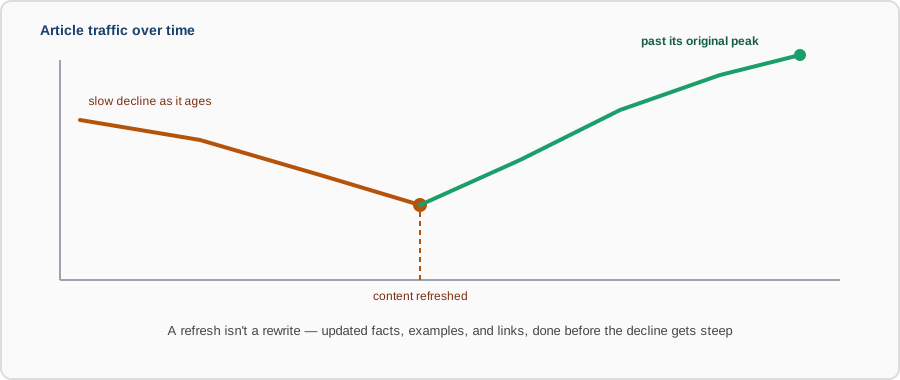
Content ages the same way any other asset does — quietly, until traffic has already declined. A refresh cycle catches that before it becomes a rewrite.
- Performance-triggered review: articles with declining traffic flagged for a refresh before the decline gets steep, not after it's already lost most of its value.
- Fact and detail updates: outdated figures, tools, or screenshots corrected — stale specifics are one of the fastest ways to lose reader trust.
- Not a full rewrite: a refresh updates what's wrong or outdated; it doesn't discard what was already working.
- Republish signals: updated dates and a note on what changed, so both readers and search engines register that the content is current again.
Contact us to build a content plan from scratch, or to figure out why your current content isn't converting.