
Infrastructure as Code
Infrastructure built by hand, one console click at a time, is infrastructure nobody can fully explain a year later. We define it as code instead — reviewable, versioned, and reproducible, so "how was this configured?" has an actual answer.
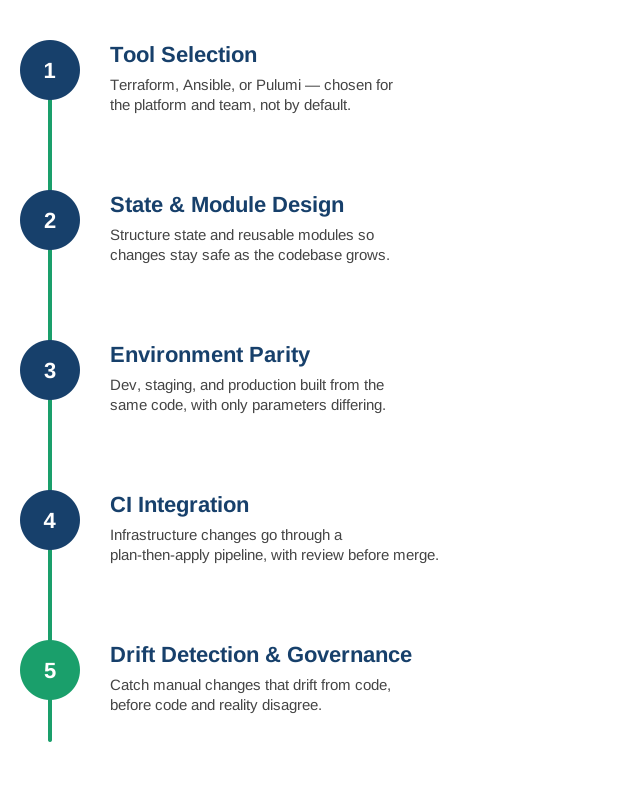
1. Tool Selection
Terraform, Ansible, Pulumi, or a cloud-native option — chosen based on your platform, team skills, and whether you need declarative provisioning, configuration management, or both.
- Provisioning vs. configuration: Terraform-style tools stand up resources; Ansible-style tools configure what's already running — many setups need both, not one or the other.
- Cloud-native options: CloudFormation, ARM/Bicep, or Deployment Manager, where staying inside one provider's own tooling is the simpler path.
- Team language fit: Pulumi and CDK let infrastructure be written in a language the team already knows, which matters more for some teams than others.
- Ecosystem and provider support: how well the tool supports the specific cloud, SaaS, and on-prem resources you actually need to manage.
2. State Management and Module Design
State is stored and locked properly, and infrastructure is broken into reusable modules, so changes stay safe and understandable as the codebase grows past a single file.
- Remote state with locking: state stored centrally with locking enabled, so two people running changes at once can't corrupt it.
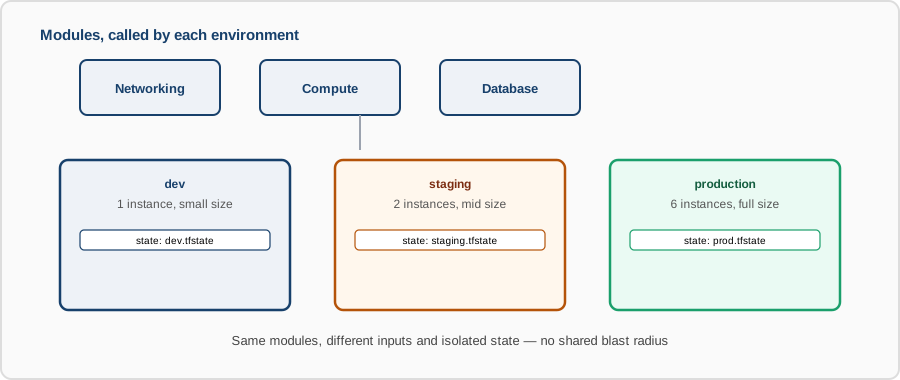
- Module boundaries: infrastructure split into modules around logical units (networking, compute, database), not one sprawling file.
- Sensible defaults, overridable inputs: modules that work out of the box but allow overrides where a specific environment genuinely needs them.
- State isolation: separate state per environment, so a mistake in staging has no path to touching production's state.
3. Environment Parity
Development, staging, and production are built from the same code with different parameters, instead of three environments that have quietly drifted apart over time.
- Shared module source: every environment calls the same underlying modules, varying only inputs like size and count.
- Parameter-driven differences: environment-specific values kept in variables files, not forked copies of the code.
- Staging as a real rehearsal: close enough to production that a successful staging apply is actually predictive of production.
- No more "it worked in dev": parity removes the most common excuse for environment-specific surprises.
4. CI Integration for Infrastructure Changes
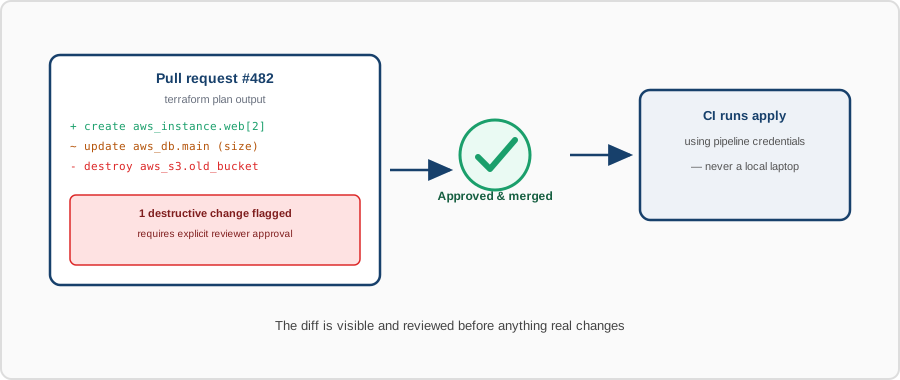
Infrastructure changes run through a plan-then-apply pipeline, with the diff reviewed before anything touches real resources.
- Plan on every PR: the exact resources that would change are shown in the pull request, before merge, not after.
- Human review of the plan: someone actually reads what's about to change, especially for destructive actions (resource replacement or deletion).
- Apply on merge: approved changes apply automatically, removing the temptation to run infrastructure commands from a laptop.
- Locked apply permissions: only the pipeline can apply to production state — not any individual's local credentials.
5. Drift Detection and Governance
We catch manual changes that drift away from what the code says, before code and reality quietly disagree with each other.
- Scheduled drift checks: a periodic plan run against live infrastructure to catch changes made outside the pipeline.
- Alerting on drift: a detected difference notifies someone, instead of silently accumulating until the next apply does something unexpected.
- Console access policy: manual changes discouraged and, where possible, restricted, so code stays the actual source of truth.
- Reconciliation process: a clear path to either codify a manual change or revert it, rather than letting drift linger indefinitely.
Contact us to bring your infrastructure under code, or to untangle a Terraform setup that's grown unmanageable.