
Continuous Monitoring and Adaptation
Back to Organic Traffic Enhancement
SEO isn't a project with an end date — it's a position that has to be defended. Rankings earned this quarter can slip next quarter from a competitor's push, an algorithm update, or content that's quietly gone stale. Monitoring is what catches that before it shows up as a revenue problem.
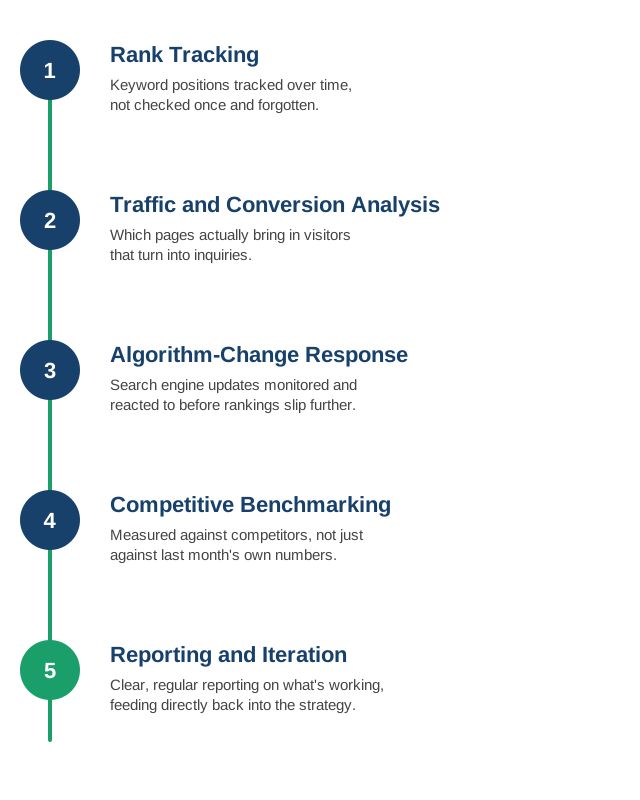
1. Rank Tracking
A ranking checked once after a change tells you nothing about the trend. Positions are tracked continuously, so movement — up or down — gets noticed while it's still small.
- Target keyword set: the same core terms from the keyword strategy tracked on a fixed schedule, not spot-checked at random.
- Trend over snapshot: a single position on a single day means little — the direction over weeks and months is what actually matters.
- SERP feature tracking: featured snippets, People Also Ask boxes, and local packs tracked alongside plain rankings, since they change what a "top result" even looks like.
- Volatility alerts: a sudden multi-position drop flagged immediately, rather than surfacing weeks later in a routine report.
2. Traffic and Conversion Analysis
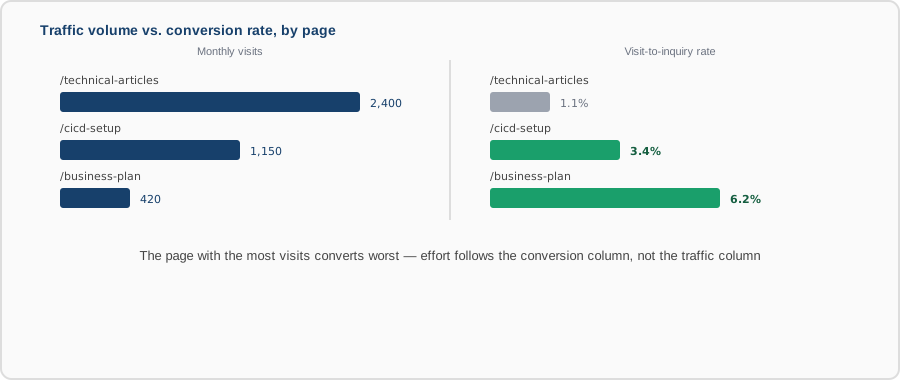
Visits are a vanity number until they're connected to what happens next. The page bringing in the most traffic isn't necessarily the page bringing in the most business — and budget follows the second number, not the first.
- Page-level attribution: traffic and conversions tracked per page, so effort goes toward what's actually driving inquiries.
- Funnel drop-off: where visitors leave before converting, so friction gets fixed at the specific step losing them.
- Source quality: not all traffic is equal — organic visitors arriving for the right keyword convert differently than traffic that landed by accident.
- Analytics tooling: Google Analytics and SEMrush data cross-checked against each other, since either one alone can miss part of the picture.
3. Algorithm-Change Response
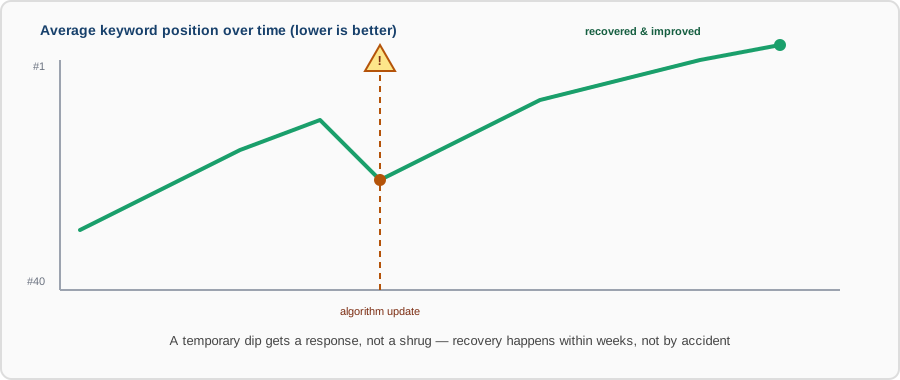
Search engines update their ranking systems constantly, and a strategy that worked last year can quietly stop working with no warning beyond a ranking dip. The response has to be fast and specific, not a shrug and a wait-and-see.
- Update detection: ranking volatility correlated against known and suspected algorithm updates, so a drop gets diagnosed instead of guessed at.
- Root-cause analysis: what actually changed — content quality signals, technical factors, link patterns — rather than reacting to the symptom alone.
- Targeted correction: fixes aimed at the specific pages and factors affected, not a blanket rewrite of everything on the site.
- Recovery tracking: the response measured against the same ranking data that flagged the problem, to confirm it actually worked.
4. Competitive Benchmarking
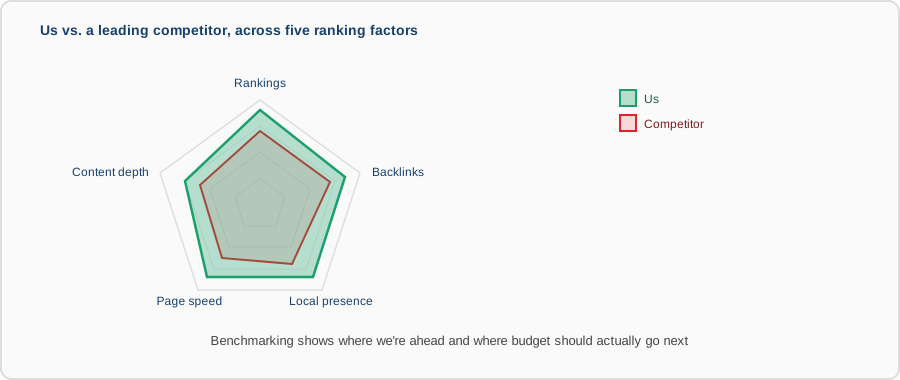
A ranking that's improving in isolation can still be losing ground — if a competitor is improving faster. Progress is measured against the field, not just against last month's own numbers.
- Direct competitor tracking: the same keyword set monitored for the competitors actually being lost to, not a generic industry benchmark.
- Gap identification: where a competitor is ahead — content depth, backlinks, page speed — pinpointed rather than assumed.
- Share-of-voice: visibility across the full target keyword set, not just a handful of flagship terms.
- Opportunity spotting: factors where we're already ahead, so that advantage gets reinforced rather than left to erode unnoticed.
5. Reporting and Iteration
Data that stays in a dashboard nobody reads doesn't change anything. Reporting closes the loop — turning what the numbers show into the next thing that actually gets worked on.
- Clear, regular cadence: reporting on a fixed schedule, not only when something goes wrong.
- What's working and what isn't: plainly separated, so effort keeps going where it's paying off instead of where it happened to start.
- Action items, not just numbers: every report ends in specific next steps, not a chart with no follow-up.
- Strategy revisited: the keyword strategy and content plan updated based on what the data actually shows, closing the loop back to where the process started.
Contact us to set up rank tracking and reporting that actually gets read, or to find out why a ranking dropped and what to do about it.