
Paid Advertising
Paid advertising can produce fast, reliable leads or quietly burn budget with nothing to show for it — the difference is almost entirely in targeting, structure, and what happens after the click. We run paid campaigns built around a measurable return, not just impressions.
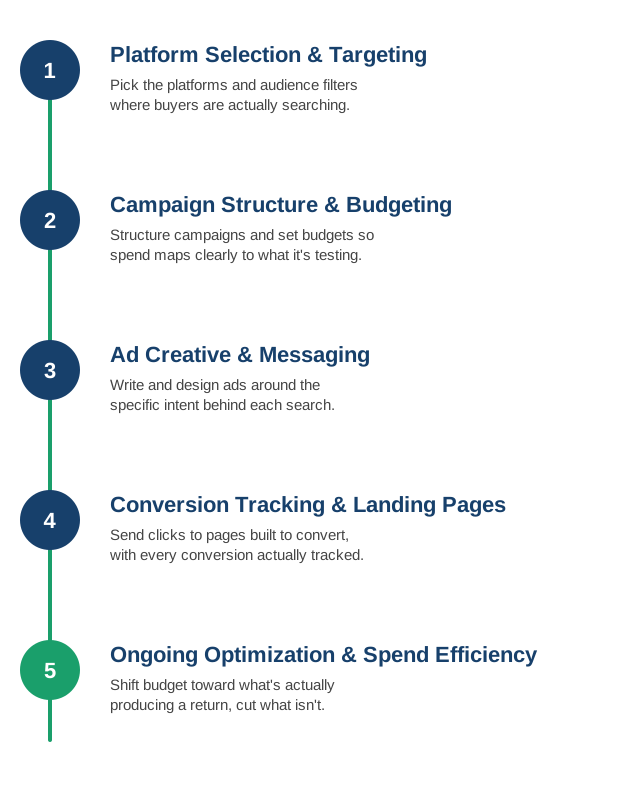
1. Platform Selection and Targeting
We pick the platforms and audience filters where buyers are actually searching, rather than spreading budget thin across every channel available.
- Platform fit: Google Ads for active search intent, LinkedIn Ads for role- and company-based B2B targeting — matched to how your buyers actually look for a provider.
- Audience targeting: filtered by role, company size, industry, and intent signals, not a broad audience hoping the message lands on the right person.
- Negative targeting: excluding searches and audiences that look relevant but never convert, so budget isn't spent chasing the wrong clicks.
- Geographic and timing scope: ads shown where and when your actual buyers are active, not running around the clock by default.
2. Campaign Structure and Budgeting
We structure campaigns and set budgets so spend maps clearly to what it's testing, instead of one large campaign where it's impossible to tell what's working.
- Campaign segmentation: separate campaigns per service line or audience, so performance data isn't averaged into meaninglessness.
- Budget allocation: spend weighted toward what's already proven to work, with a deliberate, bounded amount set aside for testing new angles.
- Bid strategy: matched to the goal — maximizing clicks early on, shifting to maximizing conversions once there's enough data.
- Pacing control: budget spent evenly across the period it's meant to cover, not exhausted in the first few days.
3. Ad Creative and Messaging
We write and design ads around the specific intent behind each search, rather than running one generic ad across every campaign.
- Intent-matched copy: ad text that speaks directly to what someone typed, not a generic pitch that could apply to any search.
- Clear value proposition: what makes the offer worth clicking on, stated plainly rather than buried under generic claims.
- Multiple creative variants: several headlines and descriptions tested against each other, not a single ad left to run untouched.
- Ad extensions used fully: sitelinks, callouts, and structured snippets that give an ad more presence and more paths to convert.
4. Conversion Tracking and Landing Pages
We send clicks to pages built to convert, with every conversion actually tracked back to the campaign and keyword that produced it.
- Dedicated landing pages: a page built around the specific offer in the ad, not a generic homepage that makes visitors hunt for relevance.
- Conversion tracking configured correctly: form fills, calls, and bookings tracked back to the exact campaign and keyword, not lumped into an "all traffic" total.
- Fast, mobile-friendly pages: a slow or broken mobile landing page loses paid clicks you already paid for.
- Clear next step: one obvious action on the page, matching exactly what the ad promised.
5. Ongoing Optimization and Spend Efficiency
We shift budget toward what's actually producing a return and cut what isn't, instead of letting a campaign run unattended on autopilot.
- Regular performance review: cost per lead and cost per conversion checked on a set cadence, not only when something feels off.
- Keyword and audience pruning: underperforming terms and audience segments paused before they quietly drain the budget.
- Creative refresh: ad fatigue addressed by rotating in new variants before performance visibly declines.
- Return-on-spend focus: decisions driven by cost per acquired client, not vanity metrics like impressions or raw click volume.
Contact us to set up paid advertising from scratch, or to get a clearer return from campaigns you're already running.