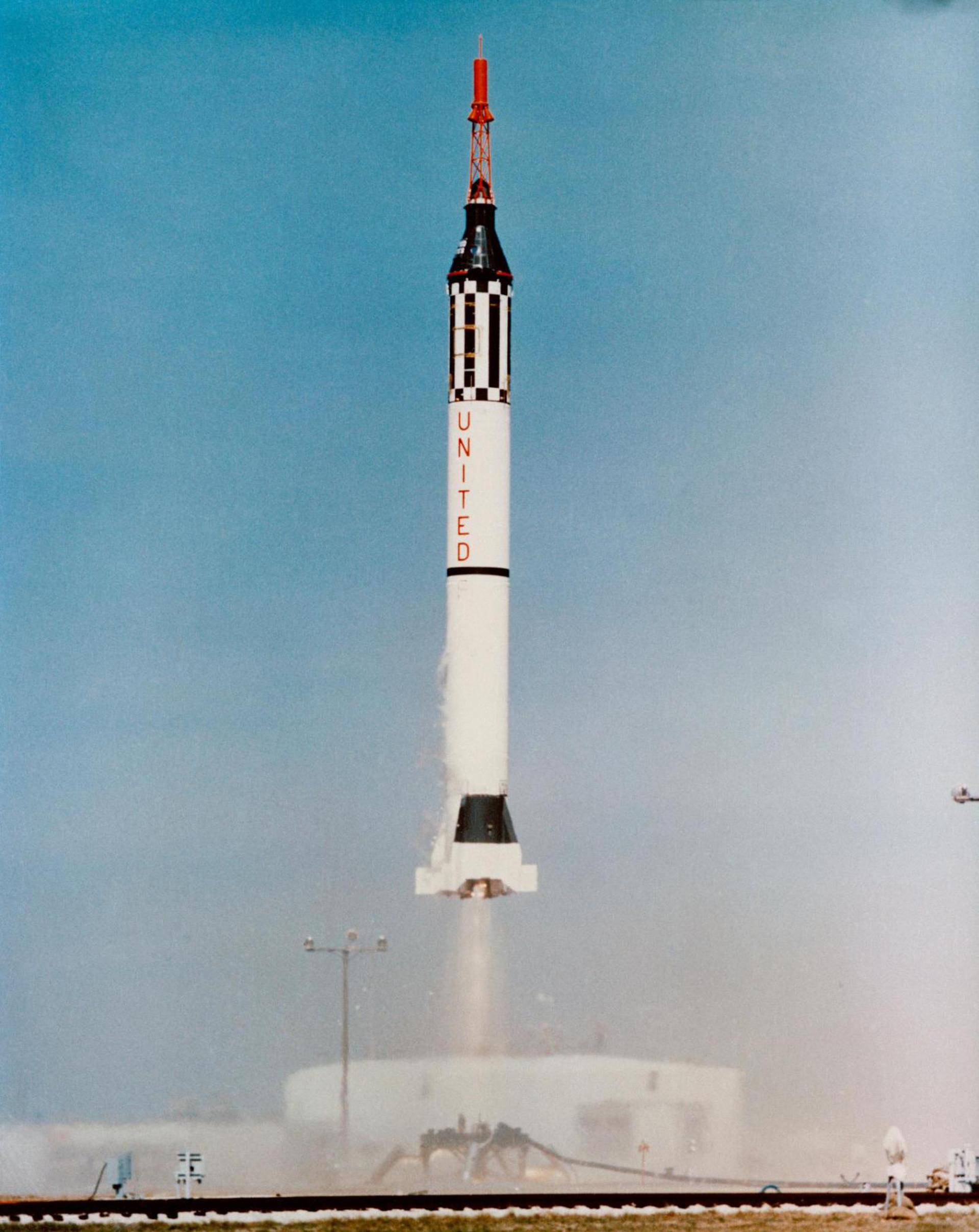
Redstone MRLV
Profile data last updated: 2026-08-29T15:37:07.354998+00:00 | 7531-10-17
The Mercury-Redstone Launch Vehicle, designed for NASA's Project Mercury, was the first American manned space booster. It was used for six sub-orbital Mercury flights from 1960–61; culminating with the launch of the first, and 11 weeks later, the second American (and the second and third humans) in space. The four subsequent Mercury human spaceflights used the more powerful Atlas booster to enter low Earth orbit. A member of the Redstone rocket family, it was derived from the U.S. Army's Redstone ballistic missile and the first stage of the related Jupiter-C launch vehicle; but to human-rate it, the structure and systems were modified to improve safety and reliability.
Specifications
Payload Capacity
No payload capacity figures published for this configuration.
Lifetime Launch Record
As reported by Launch Library 2 across this rocket's entire history, not just the launches tracked on this site.
Launches Tracked on This Site
| Mission | Date | Status |
|---|---|---|
| Redstone MRLV | Mercury-Redstone 4 | Jul 21, 1961 12:20 UTC | Success |
| Redstone MRLV | Mercury-Redstone 3 | May 05, 1961 14:34 UTC | Success |
| Redstone MRLV | Mercury-Redstone BD | Mar 24, 1961 17:30 UTC | Success |
| Redstone MRLV | Mercury-Redstone 2 | Jan 31, 1961 16:55 UTC | Success |
| Redstone MRLV | Mercury-Redstone 1A | Dec 19, 1960 16:15 UTC | Success |
| Redstone MRLV | Mercury-Redstone 1 | Nov 21, 1960 14:00 UTC | Failure |