
Troubleshooting System Issues and Downtime Prevention
Every system eventually has a bad day. What separates a quick recovery from a prolonged outage is whether the groundwork — monitoring, redundancy, and a clear response process — was already in place before something broke. We work on both sides: fixing what's broken now, and reducing how often it happens again.
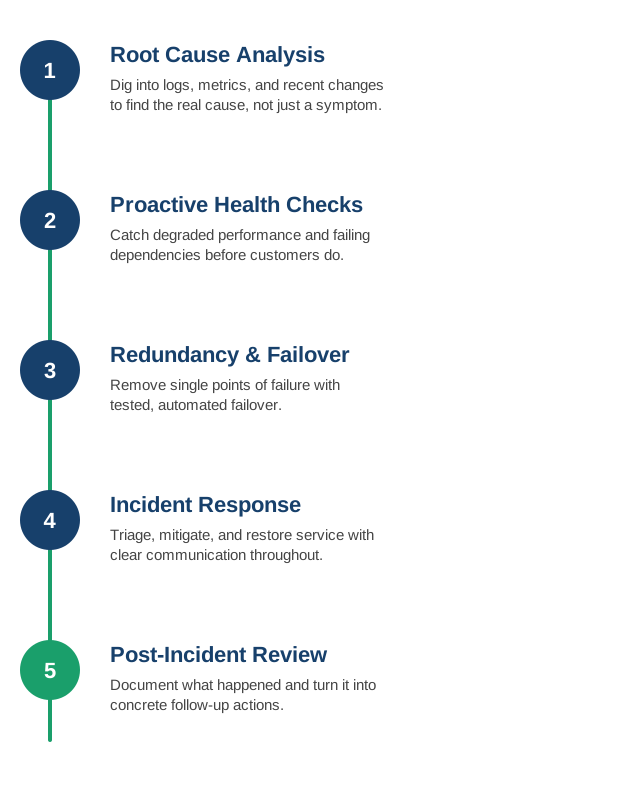
1. Root Cause Analysis
Rather than restarting a service and moving on, we dig into logs, metrics, and recent changes to find the actual cause of an issue, so the same failure doesn't quietly return next week.
- Log correlation: tying together logs across services to reconstruct what actually happened, not just where the error message showed up.
- Timeline reconstruction: lining up metrics, deploys, and config changes against the incident window to find what changed right before things broke.
- Change correlation: checking recent deployments, dependency updates, and infrastructure changes first — most incidents trace back to something that changed recently.
- Safe reproduction: reproducing the issue in staging where possible, so the fix can be verified before it goes anywhere near production again.
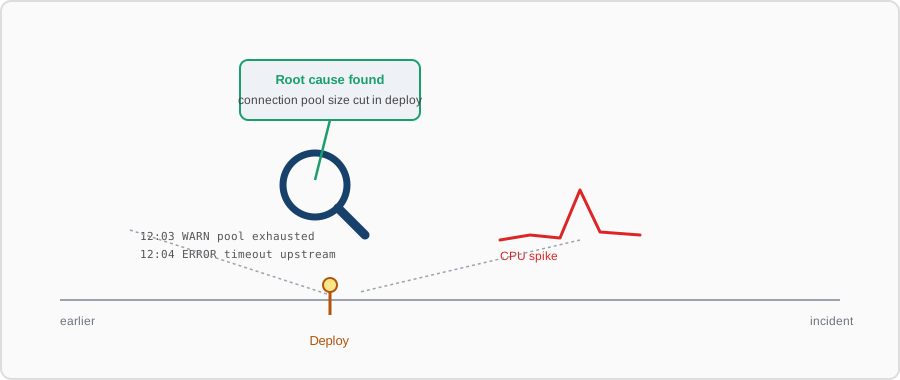
You get a documented root cause, not just "we restarted it and it's fine now."
2. Proactive Health Checks
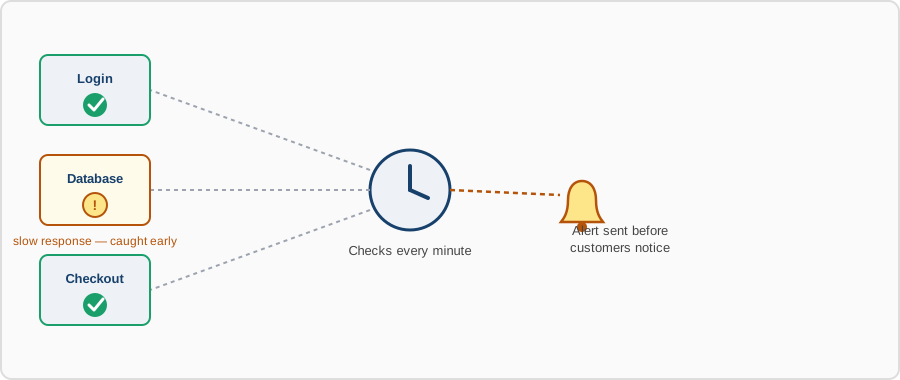
We set up health checks and synthetic monitoring on the services that matter most, catching degraded performance and failing dependencies before customers notice.
- Synthetic transactions: automated checks that simulate real user flows — login, checkout, search — not just a ping to see if the server responds.
- Dependency checks: monitoring the databases, queues, and third-party APIs a service relies on, since most outages start one layer down.
- Meaningful thresholds: alert thresholds tuned to your actual traffic patterns, so alerts mean something instead of being background noise everyone ignores.
- Built-in health endpoints: services expose a real health check reflecting actual readiness, not just "the process is running."
3. Redundancy and Failover Planning
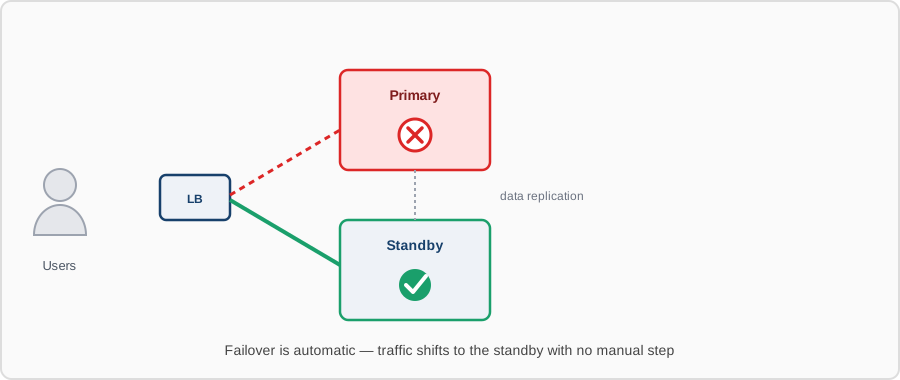
We identify single points of failure — a lone database node, an unreplicated queue, a server with no standby — and put redundancy and automated failover in place where it matters most.
- Single point of failure audit: systematically finding the one component that would take everything down if it failed.
- Database replication and clustering: so a single node failure doesn't mean data loss or a hard outage.
- Load-balanced application tiers: traffic automatically routed away from unhealthy instances instead of piling up behind a dead one.
- Tested failover: failover that's actually been triggered and verified, not just configured and assumed to work.
4. Incident Response
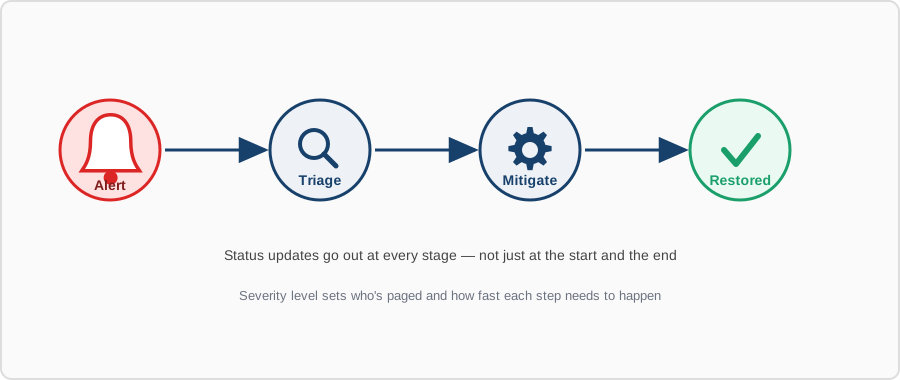
When something does go down, we work the incident directly: triage, mitigate, and restore service, communicating status as we go rather than going dark until it's fixed.
- Severity levels: a clear framework for what counts as critical versus minor, so response effort matches actual impact.
- Defined escalation path: knowing exactly who gets involved and when, instead of figuring it out live during an outage.
- Runbooks: documented steps for known failure modes, so recovery doesn't depend on one person's memory being available at 2 a.m.
- Status communication: regular updates while an incident is active, so stakeholders aren't left guessing.
5. Post-Incident Review
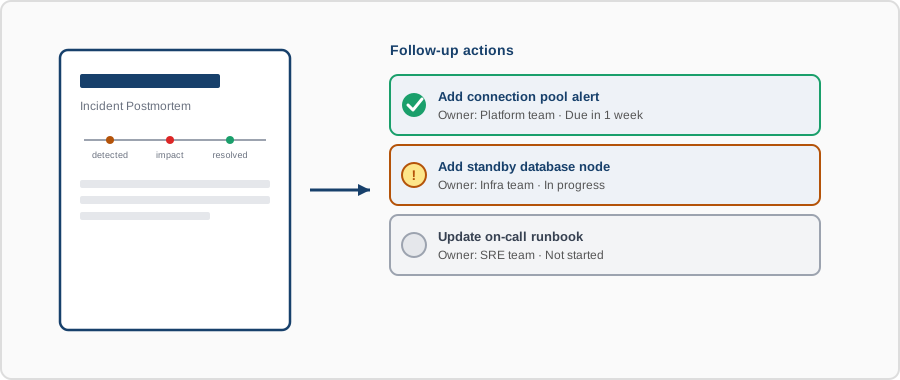
After the fire is out, we document what happened and why, and turn it into concrete follow-up actions — a monitor, a runbook, a redundant component — so the fix outlasts the incident.
- Blameless postmortems: focused on what failed in the system and process, not who to blame — that's what gets people to talk openly about what happened.
- Full timeline writeup: detection, response, and resolution documented while it's still fresh.
- Concrete action items: specific fixes with owners and deadlines, not a vague "we'll look into it."
- Follow-through tracking: action items tracked to completion, so the same postmortem doesn't get written again in three months.
Contact us if you're dealing with recurring outages or want a second opinion on your current failover setup.