
Cloud Migration Services
Moving to the cloud is a project with a beginning and an end, not an open-ended initiative — and it goes wrong most often when workloads are moved without a plan for data sync, cutover, or rollback. We run the migration itself, end to end. For the provider and platform decisions behind it, see our cloud infrastructure consulting service.
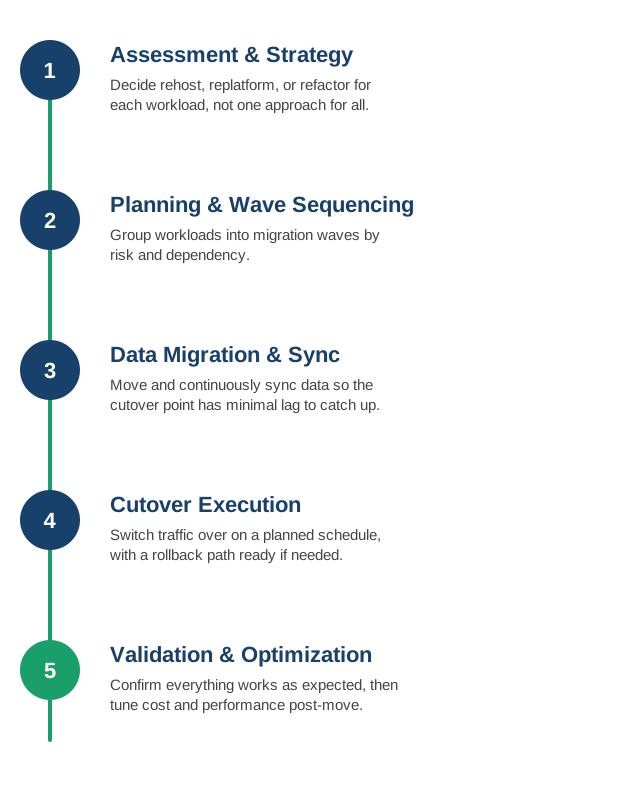
1. Migration Assessment and Strategy
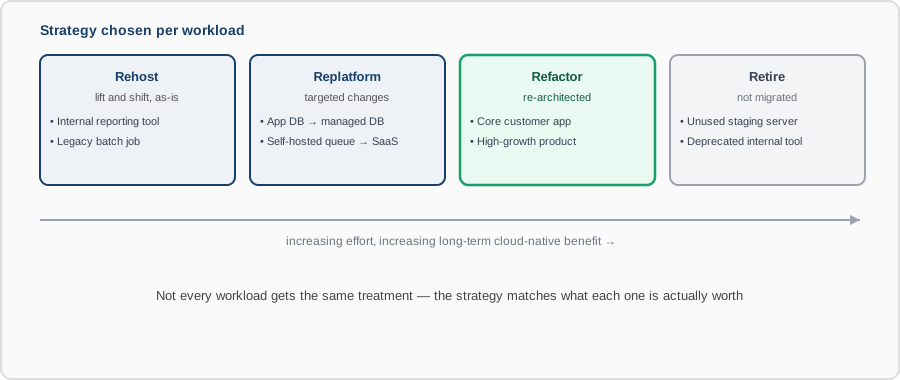
Each workload gets its own strategy — rehost, replatform, or refactor — based on what it actually needs, instead of forcing every application through the same migration pattern.
- Rehost ("lift and shift"): moved largely as-is, fastest path for workloads that don't need architectural change to benefit from the cloud.
- Replatform: moved with targeted changes — swapping a self-managed database for a managed one, for example — without a full rewrite.
- Refactor: re-architected to be cloud-native, justified when the long-term benefit clearly outweighs the upfront cost and risk.
- Retire or retain: some systems are better left on-prem, or retired outright rather than migrated at all — a legitimate outcome of the assessment.
2. Migration Planning and Wave Sequencing
Workloads are grouped into migration waves by risk and dependency, so early waves validate the approach before the most critical systems move.
- Dependency-aware grouping: workloads that depend on each other move together, or in an order that doesn't break either one mid-migration.
- Low-risk-first sequencing: early waves are lower-stakes systems that validate the process before it's used on anything critical.
- Defined wave boundaries: each wave has a clear scope and success criteria, not an open-ended "move things as we get to them."
- Buffer time between waves: room to absorb lessons from one wave before starting the next, rather than running them back-to-back regardless of what went wrong.
3. Data Migration and Sync
Data is migrated and kept continuously in sync with the source right up to cutover, keeping the final gap to close as small as possible.
- Initial bulk transfer: the bulk of the data moved ahead of time, when a slower transfer speed doesn't matter yet.
- Continuous replication: ongoing changes streamed to the new environment so it stays current instead of aging behind the source.
- Validation checksums: transferred data verified against the source, catching corruption or truncation before it's trusted.
- Minimal final sync window: because most data is already synced, the last gap to close at cutover is small enough to happen quickly.
4. Cutover Execution
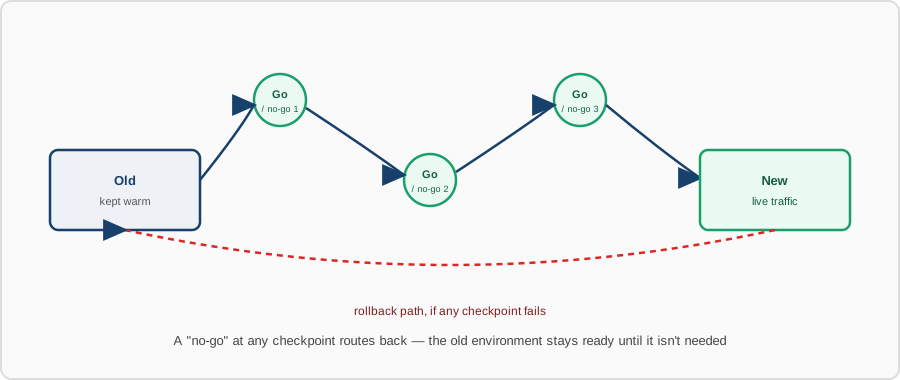
Traffic switches over on a planned schedule with a tested rollback path, not a one-way door with no way back if something goes wrong.
- Scheduled low-traffic window: cutover timed for when the impact of any hiccup is smallest.
- Traffic switch mechanism: DNS, load balancer, or router-level cutover chosen for how quickly it needs to take effect.
- Rollback plan ready: a tested way to switch back to the old environment if the new one shows a problem post-cutover.
- Go/no-go checkpoints: explicit decision points during cutover, not a single all-or-nothing leap.
5. Post-Migration Validation and Optimization
We confirm the migrated workload actually performs as expected, then tune cost and performance now that it's running on its new platform.
- Functional validation: confirming the migrated system actually behaves the same way it did before the move.
- Performance comparison: latency and throughput checked against the pre-migration baseline, not just "seems fine."
- Cost tuning: right-sizing resources now that real cloud usage patterns are visible, rather than leaving lift-and-shift sizing in place indefinitely.
- Decommissioning the old environment: the original system retired on a deliberate schedule, once the new one has proven stable.
Contact us to plan a cloud migration, or to get an in-progress migration back on track.