Humanoid Robotics: Hardware and Actuation in 2026

Snapshot as of July 2026 — component technology and pricing in this space are moving quickly.

A humanoid robot's headline specs — degrees of freedom, payload, battery life — all trace back to three unglamorous engineering problems: how each joint is driven, how the hands sense and grip, and how much energy can be packed in before the robot gets too heavy to carry it. This piece looks at where the hardware actually stands, one layer below the company announcements in our Key Players and Platforms overview.
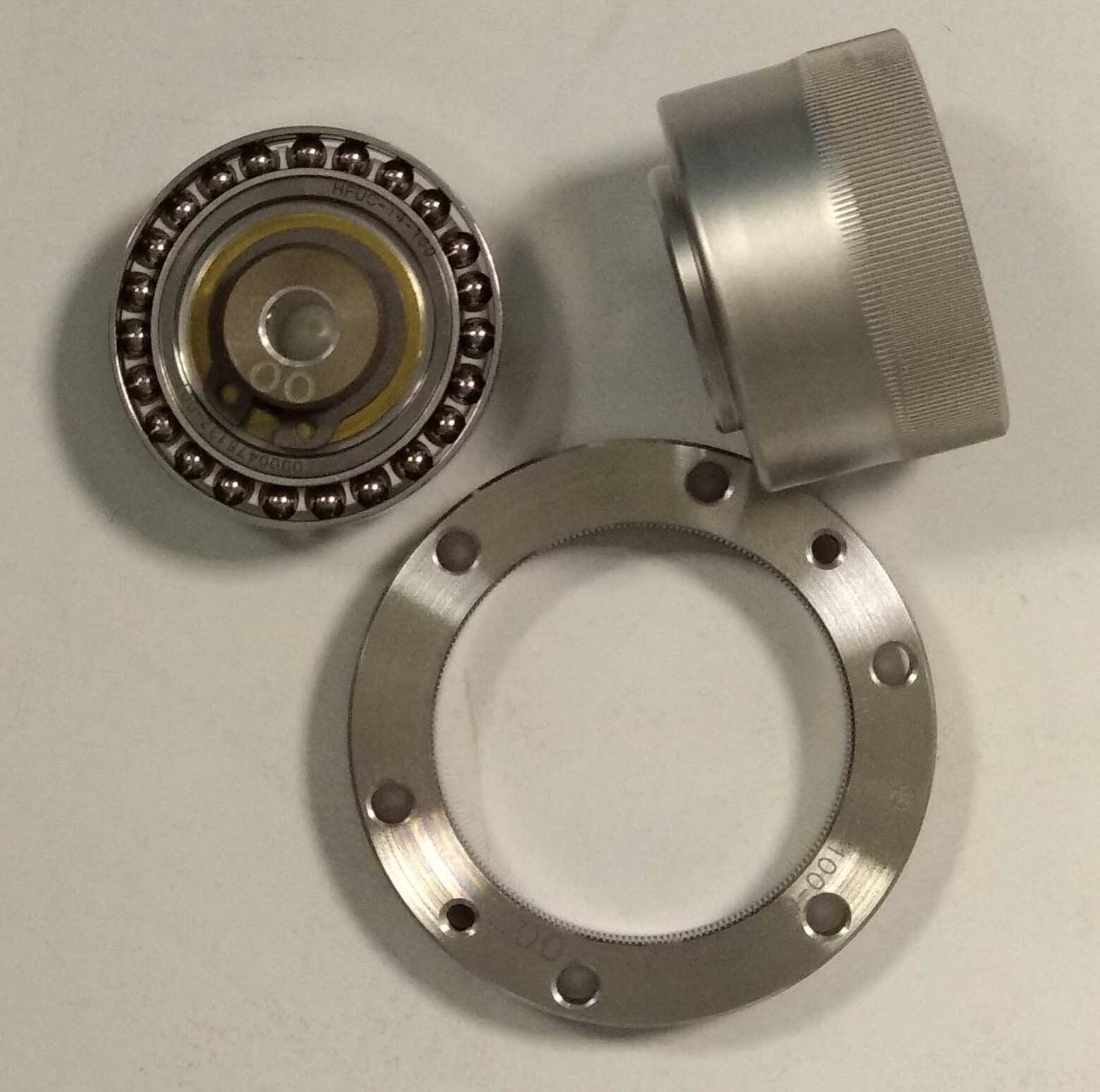
Strain wave (harmonic drive) gear components

Actuators: From Hydraulics to Quasi-Direct Drive

Boston Dynamics' original Atlas ran on hydraulics because hydraulic actuators deliver enormous force in a small package — but they're heavy, leak-prone, and hard to make quiet or efficient. The company dropped hydraulics entirely for the all-electric Atlas, a shift the industry now reads as a broader strategic move: electric actuation is cheaper to manufacture, easier to maintain, and scales better across a product line.

Electric actuation itself has gone through its own evolution. Early designs used high-reduction gearing that is rigid and precise but transmits every bump and impact straight back into the motor and gearbox. Series elastic actuators (SEA) added a spring in the drivetrain to absorb shock, at the cost of some precision. The design now converging across the industry is quasi-direct drive (QDD): a low-speed, high-torque motor paired with a low gear-reduction stage, so the motor itself — not a spring — provides most of the compliance. That gives a humanoid joint high force-control bandwidth and natural impact tolerance while staying compact enough to fit inside a human-sized limb. Figure AI has been open about using proprietary QDD actuators since its first-generation robot, and QDD is now considered close to a default architecture for new general-purpose humanoids.

Tesla's approach illustrates just how custom this hardware has become: Optimus uses 28 actuators built down to just 7 standardized types, with its rotary joints (shoulders, hips, knees, elbows) combining a frameless torque motor, a harmonic (strain-wave) gear reducer, and dual position encoders in one integrated unit. Harmonic drives — like the disassembled gear set pictured here — are prized for being compact, backlash-free, and capable of a high reduction ratio in a single stage, which is exactly what a human-scale joint needs. Tesla is reportedly sourcing a large share of these reducers from Chinese supplier Suzhou Green Harmonic as it tries to cut cost well below what Japanese harmonic-drive makers have historically charged.

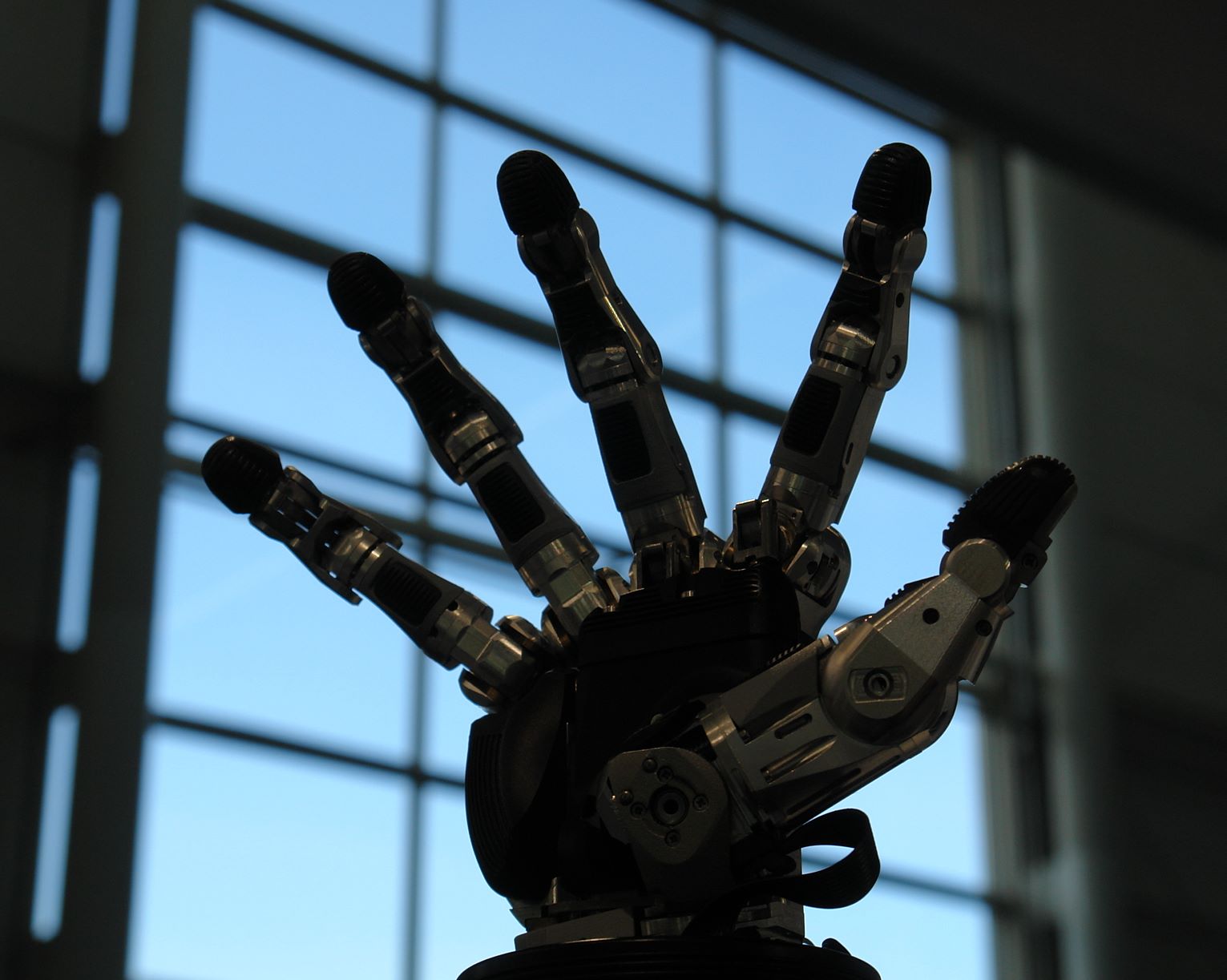
Multi-fingered robotic hand with articulated joints

Hands and Tactile Sensing

If a humanoid can't manipulate objects reliably, walking around doesn't matter much — which is why hands have become one of the hardest and most expensive parts of the robot. Industry cost breakdowns put dexterous hands at roughly 31% of a humanoid's total bill of materials, the single largest line item, ahead of the legs or torso.

1X's NEO is a useful example of where the state of the art sits: its hands pack 25 actuated degrees of freedom driven by tendons rather than motors embedded in each finger joint, which keeps the fingers slim while still reaching near-human dexterity and grip strength. High-resolution tactile sensors on the fingertips detect pressure and slippage in real time, letting the hand adjust grip force automatically instead of relying purely on pre-planned motion.

Tactile "skin" is becoming its own product category rather than a bespoke add-on. XELA Robotics showed its uSkin sensor line at CES 2026 — layered elastomer sensors that report contact force, shape, and movement across fingertips, phalanges, and palms — with a redesigned fingertip cover meant to survive industrial use without replacing the whole sensor when it wears out. That kind of serviceability detail matters as much as raw sensitivity once these hands are doing repetitive warehouse or factory work all day.

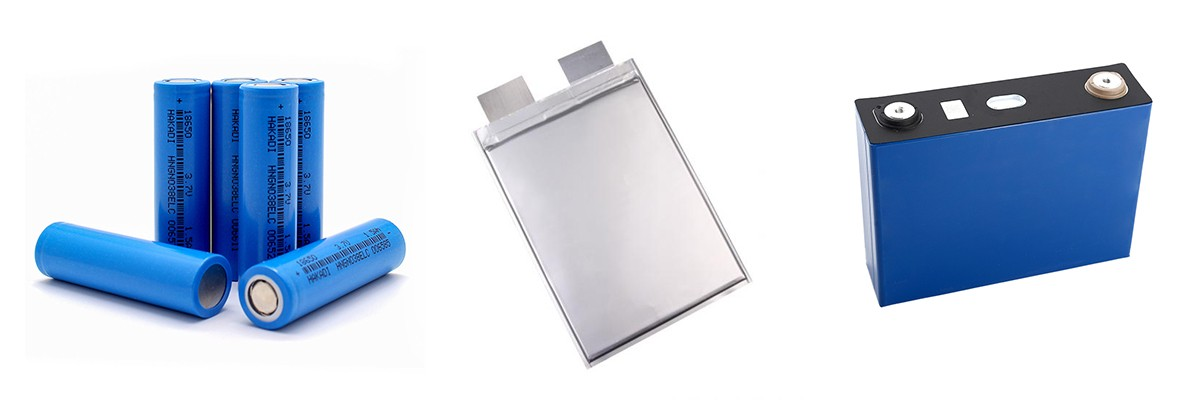
Cylindrical, prismatic, and pouch lithium-ion battery cells

Batteries: The Weight Paradox

Almost every current humanoid runs on high-nickel lithium chemistry (NMC/NCA) in cylindrical 21700 or 4680-style cells, the same cell formats the EV industry standardized on, which is precisely why they're cheap and available at volume. Mainstream pack energy density sits around 250-350 Wh/kg — enough for roughly two to four hours of real, working runtime on packs generally under 2 kWh.

That runtime ceiling is the industry's most persistent complaint, and it isn't simply a matter of adding a bigger battery. Engineers describe a "weight paradox": a larger pack adds mass that the robot's own actuators then have to carry and move, so battery life doesn't scale linearly with battery size — past a certain point, a bigger pack drains faster than a smaller one because so much of its own energy goes into hauling itself around. That's pushed the emphasis toward energy density rather than raw capacity. Semi-solid-state cells, already reaching 350-400 Wh/kg in early production, are being positioned as a 2026 validation step, with fully solid-state cells — potentially over 500 Wh/kg, and safer, since they replace the liquid electrolyte — pencilled in for mass production around 2027.

The Supply Chain Bottleneck

None of the above scales on its own. Precision components — strain-wave gears, planetary roller screws, high-torque motors, ballscrews, high-density cells — are currently made by a small number of specialized suppliers, and industry estimates put the number of companies capable of high-precision, high-torque humanoid actuators at fewer than ten worldwide. Going from today's low-thousands of units a year to the millions companies are publicly targeting means building entirely new manufacturing capacity for parts that were never designed to be mass-produced at that scale.

China currently holds an outsized position in that supply chain — by some estimates around 70% of global capacity across motors, actuators, sensors, batteries, and the raw materials behind them — largely because its EV manufacturing base already built the scale, supplier competition, and component clustering that humanoid production can piggyback on. That's part of why Western humanoid makers are increasingly signing direct partnerships with established automotive-parts suppliers rather than sourcing exclusively from robotics-native vendors, and why actuator and hand costs remain the two figures every serious cost breakdown of a humanoid robot comes back to.

Image credits: harmonic drive gear set photo by Pieceofmetalwork, robotic hand photo by NearEMPTiness, and battery cell diagram by CRBAman — all via Wikimedia Commons, CC BY-SA 4.0.