← Humanoid Robotics
Humanoid Robotics: AI and Control Systems in 2026
Updated: September 29, 2026 (7531-10-09 in the Bulgarian calendar)
The hardware covered in our Hardware and Actuation piece only moves usefully once something decides what to do with it. That's the job of the software stack in this article: a model that turns a camera feed and a spoken instruction into coordinated motor commands, and the training pipeline that teaches it to do that reliably.
Vision-Language-Action Models: One Model, Not a Pipeline
Older robot software split perception, planning, and control into separate stages, each hand-tuned and each a place for errors to compound. The architecture that has taken over in 2026 is the vision-language-action (VLA) model: a single model that takes in a camera feed and a natural-language instruction and outputs action directly, as a sequence of motor commands, rather than as an intermediate plan a separate controller has to interpret. That lets a robot accept a task the way you'd brief a new hire — "pick up the box on the left and put it on the conveyor" — instead of requiring the task be hand-coded.
NVIDIA's Isaac GR00T platform is the most visible open reference point: GR00T 1.7 is a VLA model pretrained on roughly 32,000 hours of real human demonstration footage plus 8,000 hours of simulation, released as part of an end-to-end pipeline covering simulation, teleoperation-based data collection, training, and real-world deployment. Google DeepMind's parallel effort, Gemini Robotics, has followed a similar path — Gemini Robotics-ER 1.6, released in April 2026, added stronger spatial reasoning and an "agentic vision" capability aimed at high-precision industrial tasks, and is offered as an API so hardware makers can use it as a shared “brain” rather than building their own. Gemini Robotics 2 followed on 30 July 2026, and the whole-body-control demonstration that launched it ran on Apptronik’s Apollo 2 — a shared brain proving itself on someone else’s hardware, which is the entire argument for the approach.
Build vs. Buy: Proprietary Models vs. a Shared Brain
2026 has split the industry into two camps. Companies that control their own robot end to end tend to keep the model in-house and tune it tightly to their own hardware: Figure AI ended its partnership with OpenAI in February 2025 and built Helix, its own in-house VLA model, which now runs Figure 03 in commercial deployment — including 40 units billing roughly $25 per robot-operating-hour at a BMW plant in Spartanburg as of January 2026. Helix reached its second version in January 2026, extending to whole-body autonomy on tasks as awkward as loading a dishwasher. Tesla takes a similar vertically integrated approach, adapting networks derived from its Full Self-Driving stack to run on its own AI5 chip.
Building in-house is not a Western habit either, which the July framing of this article missed. AgiBot develops Genie Operator, a VLA combined with a mixture-of-experts architecture, now in its second generation as of 9 April 2026. Galbot runs Galaxy Star Brain, deliberately built to span three very different bodies — wheeled, heavy-duty and bipedal — from one model, with an Astrobrain whole-body controller trained on roughly 100,000 hours of human movement driving its ET1. And XPeng designs the silicon as well as the model: three of its own Turing chips, about 2,250 TOPS, with inference entirely onboard.
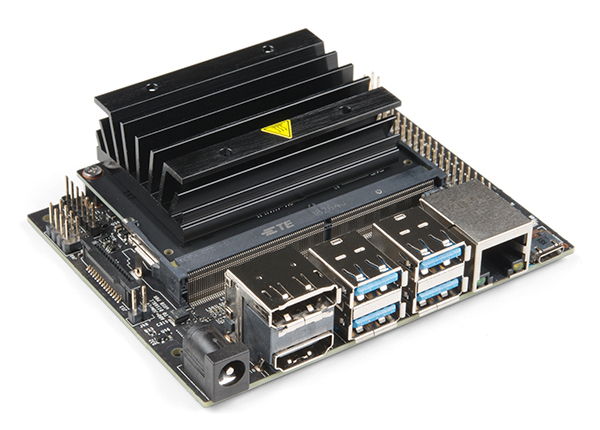
The alternative is treating the AI as a shared platform other hardware makers plug into. Boston Dynamics and Google DeepMind announced a partnership at CES 2026 to bring Gemini Robotics models to the electric Atlas; DeepMind is running the same playbook with Apptronik's Apollo and with Agile Robots' "Agile ONE" humanoid. On the compute side, NVIDIA's Jetson Thor module — the kind of embedded board pictured here — is becoming a common answer to where these models actually run onboard, with 1X citing it (alongside Isaac Sim, Isaac Lab, and NVIDIA’s Blackwell GPUs for training) as part of the stack behind NEO. The shared-brain camp is no longer a Western pattern either: Unitree, UBTECH and AgiBot have all adopted NVIDIA’s latest onboard robot compute, which means the two largest producers of humanoid hardware in the world and the best-funded American startups are increasingly converging on the same silicon, if not the same models.
Where the Training Data Comes From
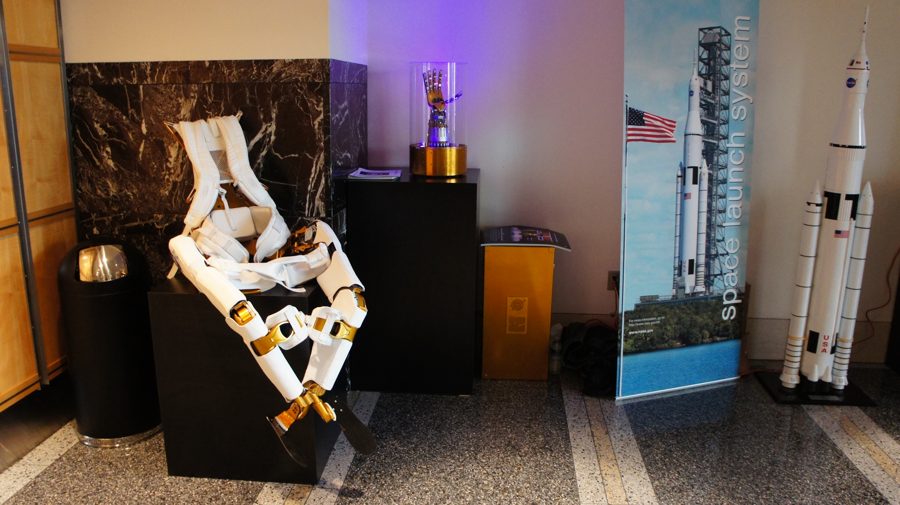
A VLA model is only as good as what it was trained on, and in 2026 that training data comes from three complementary sources rather than one. Simulation — NVIDIA Isaac Sim and Isaac Lab are the dominant tools — handles locomotion and whole-body balance, where generating millions of trial-and-error attempts on real hardware would be slow and destructive. Teleoperation handles dexterous manipulation, where a human operator's hand and arm movements are captured and mapped onto the robot: approaches range from full exoskeleton rigs (used by companies like AgiBot) to wearable capture systems matched to a specific robot's joints (Fourier's approach for its GR-1), to systems like the Nexus NX1 that track 72 degrees of freedom of body and hand motion at sub-millimeter precision. Figure AI runs its own proprietary teleoperation fleet to generate data directly from its BMW deployment. The third source, large-scale egocentric human video, supplies general scene understanding — what a kitchen or a warehouse aisle actually looks like — that’s cheap to collect but too generic to teach precise manipulation on its own.
Two developments since have changed the economics of all three. In December AgiBot open-sourced AgiBot World: over one million real robot trajectories across 217 tasks in five deployment settings, collected by more than a hundred identical robots with human-in-the-loop verification, published on HuggingFace and GitHub, with the accompanying paper a best-paper finalist at IROS 2025. That is the largest manipulation dataset anyone has given away, released by the company shipping the most humanoid robots in the world — a competitive decision as much as an academic one, since a shared dataset erodes precisely the advantage that rivals are spending heavily to build.
Which brings the cost into focus. In August 2026 Figure launched Index, a platform that pays people to wear sensors while they work and sells the resulting demonstration data back into its own training pipeline. Figure expects it to cost around $1 billion a year. Set that next to AgiBot publishing a million trajectories for nothing and the strategic split in this industry is no longer about models at all — it is about whether training data is a moat you buy or a commons you help build.
None of these three sources is sufficient alone, which is why the companies furthest along in 2026 are the ones that have invested in data infrastructure — teleoperation fleets, simulation pipelines, data-labeling — as seriously as they've invested in the robot itself.
Where This Is Heading
The near-term direction pointed to by current research is smaller, more efficient models that can run on-device rather than depending on a cloud round-trip for every action, alongside a slow move toward open-weight models that smaller hardware makers can adopt without a partnership deal. That would narrow the gap between companies like Figure and Tesla that can afford to build a model from scratch, and smaller humanoid makers that currently have little choice but to plug into a shared platform like Gemini Robotics or Isaac GR00T.
Both halves of that prediction have since started arriving, and from an unexpected direction. On-device inference is now the default rather than the ambition — Figure’s Helix runs entirely on the robot’s own GPUs with no cloud connection, and XPeng’s IRON does its own inference on Turing silicon. And the move to open weights is being led by the Chinese manufacturers rather than by anyone in the West: UBTECH open-sourced its Thinker vision-language model in February 2026, and AgiBot has open-sourced both the AgiBot World dataset and its Lingxi X1 robot platform outright. The companies with the most units in the field are the ones giving the most away, which is not how this was expected to go.
Image credits: NVIDIA Jetson Nano photo by SparkFun Electronics, CC BY 2.0. Robotic exoskeleton photo by Paulo O, CC BY 2.0. Both via Wikimedia Commons.