
Data Center Management
Physical infrastructure needs the same discipline as anything running on it — someone has to know what's racked where, whether it's running hot, who's allowed to touch it, and when the next vendor visit is due. We handle that so nothing gets discovered the hard way.
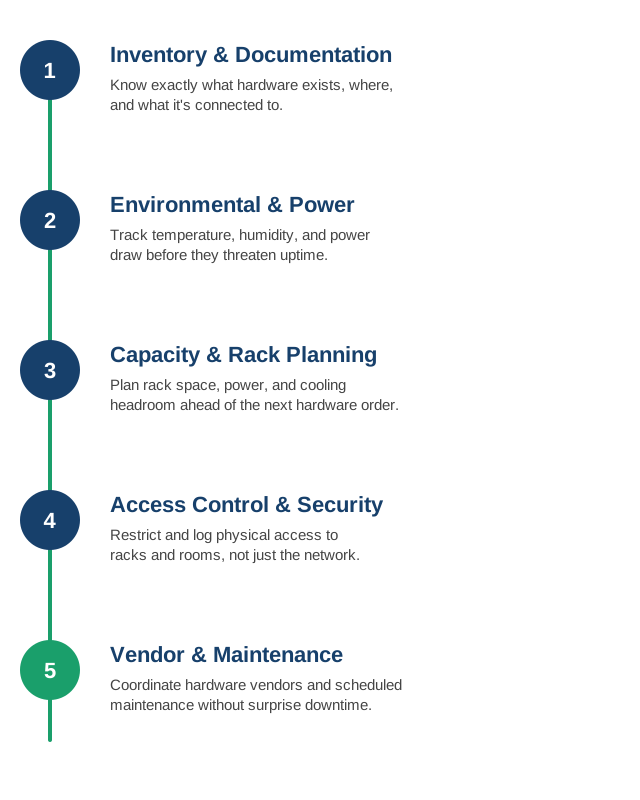
1. Inventory and Documentation
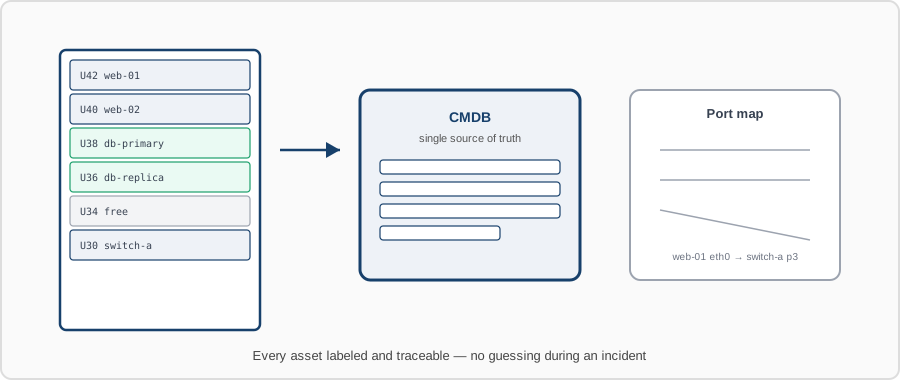
We maintain a current record of every piece of hardware — what it is, where it's racked, and what it's connected to — so nobody has to trace cables to answer basic questions.
- Asset tagging: every server, switch, and PDU labeled and tracked with make, model, and serial number.
- Rack elevation diagrams: a visual map of what occupies every rack unit, kept current as hardware moves.
- Cable and port documentation: knowing what connects to what without needing to physically trace it during an incident.
- Configuration management database (CMDB): a single source of truth that other tools and processes can reference.
2. Environmental and Power Monitoring
Temperature, humidity, and power draw are tracked continuously, catching the cooling issue or overloaded circuit before it becomes a hardware failure.
- Sensor coverage: temperature and humidity monitored at rack level, not just one reading for the whole room.
- Power draw per circuit: tracking PDU load so no circuit is quietly running near its limit.
- Threshold alerting: notifications before conditions drift out of safe range, not after equipment starts failing.
- Historical trending: spotting a slow cooling degradation or creeping power draw over weeks, not just point-in-time snapshots.
3. Capacity and Rack Planning
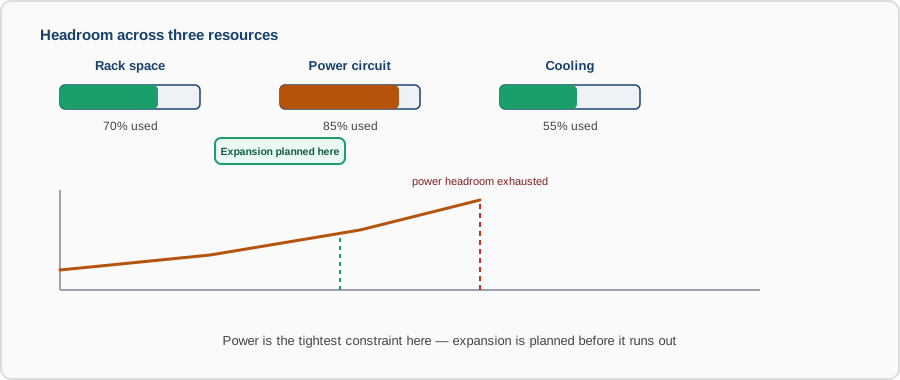
We plan rack space, power, and cooling headroom ahead of the next hardware order, instead of discovering there's nowhere left to put it on delivery day.
- Rack unit tracking: knowing exactly how much physical space is actually free, not approximately.
- Power circuit headroom: confirming new hardware won't push a circuit past its safe capacity before it's racked.
- Cooling capacity: checking that added heat load stays within what the room's cooling can actually handle.
- Growth forecasting: planning the next expansion before the current space is already full.
4. Access Control and Physical Security
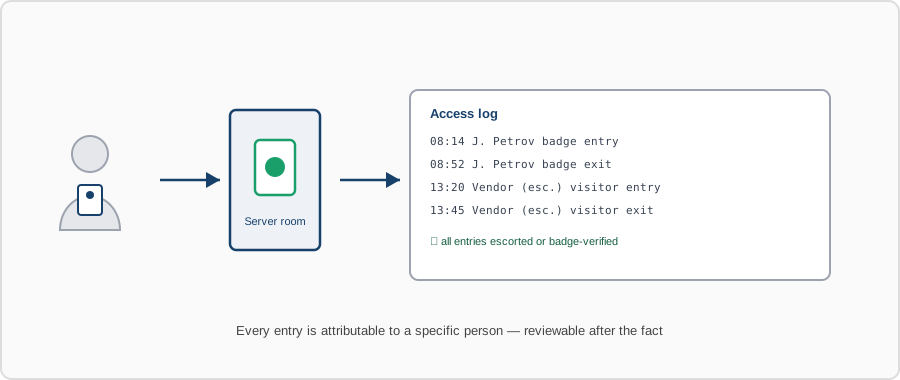
Physical access to racks and rooms is restricted and logged just as deliberately as network access — a locked server room with no access log is still a gap.
- Badge or biometric access: entry restricted to people who actually need it, not a shared key everyone has a copy of.
- Access logging: a record of who entered and when, reviewable after the fact if something needs investigating.
- Visitor and vendor tracking: external access escorted and logged, not left on the honor system.
- Cage or rack-level restriction: in shared facilities, limiting access to your own footprint specifically.
5. Vendor and Maintenance Coordination
We coordinate hardware vendors, warranty work, and scheduled maintenance windows, so upkeep doesn't turn into unplanned downtime.
- Warranty tracking: knowing what's still covered and by whom before a failure makes it urgent.
- Scheduled maintenance calendar: vendor visits and firmware work planned into low-impact windows.
- Spare parts management: critical spares on hand for the failures that can't wait on next-day shipping.
- Escalation contacts: a clear path to the right vendor contact when something needs faster attention than the standard queue.
Contact us to review your current data center setup, or to take over ongoing management.